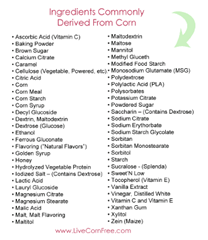
Are you looking for the Master List of Ingredients to Avoid? It can be found here: http://go.livecornfree.com/list

Friday, July 30, 2010

Dear Beekeeper, Are Your Honey Bees Corn-Free?

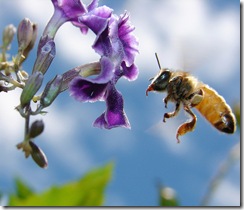
Honey Bee As addressed in a previous post, corn syrup is commonly fed to bees as supplemental feeding to help them live through the winter. Although Agave is a decent alternative to honey on occasion, I must admit, I prefer honey!

Bees by nature are corn-free creatures, and their honey and beeswax would be corn-free if they were left to their natural devices. I have spoken to beekeepers in my local area and have struck out where it comes to finding corn-free bees. However, I recently learned about a very cool group of people known as the Backwards Beekeepers (based in Los Angeles, California) who are interested in keeping bees – the natural way.

Out of hope for more people and groups like the Backwards Beekeepers, I’d like to put out a Call to Action, as I search for Corn-Free Honey, and Corn-Free Beeswax.

If you are a beekeeper who practices similar beekeeping methods to those of the Backwards Beekeepers (including healthy supplemental feeding), I want to connect! Specifically, I would like to know if you sell Corn-Free Honey and/or Beeswax. Do you sell in your local area, and, are you up to selling to areas that would require shipment?

As a beekeeper who sells Corn-Free Honey, or Corn-Free Beeswax, I will open the opportunity to list your business on The Corn-Free Guide. Many people like myself would like to know about you, and may be interested in buying – but we need help locating your corn-free goods!

To be listed in the Corn-Free Guide, please contact me and include the information below.
* Name:
* Email Address:
* Business Name:
* City, State:
* Willing to ship outside your local area, within the US? (yes/no):
* Business site or blog URL:
* Do you ever feed your bees corn syrup? (yes/no):
If you contact me with the above information, I will be in touch with you prior to listing your business in The Guide.

And to those of you brave enough to practice Urban Beekeeping - I am in awe! Thank you for all the work that you are doing to provide bees with a natural safe habitat!

Image Credit: aussiegall

Friday, July 2, 2010

Abita Beer has Corn-Free Options

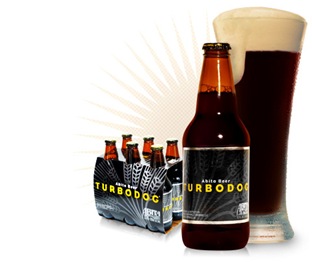
Abita Beer A few weeks ago I had a very interesting and wonderful conversation with one of the beer crafters at Abita Beer. The representative I spoke to was not only knowledgeable about beer crafting in general, but also had detailed knowledge about Abita’s practices and procedures. He was also happy to talk to me at length to determine why I had unfortunately, had an allergic reaction to one of their beers. Out of all the hundreds of conversations I have had with companies over the last 8 months, that conversation sticks out in my mind. They have genuine interest in their customers and want their customers who enjoy their beer. Who could ask for more?

Abita Beer uses Louisiana sugar cane (instead of corn syrup) and does not use preservatives, additives, or stabilizers. All in all, it should be a relatively safe choice for those avoiding corn. Which is what made my situation a little confusing…

In the past I have successfully enjoyed Abita Turbodog Beer (no reaction) but didn’t get five minutes past the first sip of Abita Purple Haze before my eyelids began to swell. I even did a second test run a few days later (Purple Haze is very good beer, I had to be sure!) but indeed had another allergic reaction after just a few sips.
Abita Beer Turbo Dog
As it turns out, there is ascorbic acid in the Raspberry Puree that is added to Purple Haze. Bingo – that explained my allergic reaction. So what does this mean for Abita and a Corn-Free status? In my conversation with Abita I learned another place where corn may hide in beer production – something that Abita does NOT do. Often ascorbic acid is added during the final stage of beer bottling to act as an oxygen scavenger. The purpose of an oxygen scavenger is to consume the oxygen, allowing the beer to stay fresher longer as it travels to shopping store shelves and later to your refrigerator. Since Abita Beer does not add ascorbic acid to their beer, I have confidence that the majority of their beers will indeed be safe for those of us allergic to corn.

In the last few weeks I have tried another one of Abita’s beers, their Amber beer, and also returned to the safety of one of my all time favorites – Turbodog. Still reaction-free for those two beers. I have confidence that Abita brews good, pure beer, but I will stay away from their beers that contain added fruit such as Purple Haze, and their Strawberry Harvest.

For the time being, only Amber and Turbodog will be listed in The Guide, but others will be added as I learn they completely corn-free.

Cheers!

Thursday, June 24, 2010

Mind Your Beeswax: Corn's Hold on Honey

Honey If you have swapped out Honey in exchange for artificial sweeteners in an attempt to avoid corn derivates, you may still be consuming corn.

Since you may not be eager to give up honey entirely, it is important to know how and why it may be contaminated, so you can ask questions that may help you find corn-free honey!

Corn may extend it’s reach to honey either by directly being added to the end result, as an unlabeled ingredient in the form of HFCS, or because HFCS is sometimes fed directly to honey bees.

Have you ever heard of eating local honey to help with your allergies? The idea behind this theory is that the honey will contain bits of pollen and with continued exposure you may become less allergic. That’s not really a topic to discuss here, other then the correlation that the bee consumes the pollen, and traces of pollen result in the honey.

Pollen will not be the only food source for a honey bee, and other foods consumed by the bee will result in the honey, just as the pollen does. It is common practice to provide supplemental food options to keep the bees alive during times when their natural food source is scarce. The “seasons” will differ depending on location, but the end result is the same. The beekeeper may provide a sugar syrup to the bees, and this sugar syrup could be one of many types of sugar, including High Fructose Corn Syrup.

HoneyBeeWorld.com, a source of information for beekeepers, explains the various options for supplemental feeding for honey bees. BeeSource.com provides test results that show they were able to detect that bees fed HFCS produce honey with traces of HFCS present.

Now, how can we go about finding corn-free honey? The answer is similar to finding other corn-free products. You must know your source. Simply buying a jar of honey at the grocery store won’t tell you if there are traces of HFCS in the honey. The only way to know for sure if your honey is corn-free, is to talk to the beekeeper.

Find a Farmer’s Market in your area, and talk to the local honey producers. You will want to know what season the bees are receiving supplemental feeding, and, what food source is provided. Not all beekeepers approve of feeding HFCS to the bees (the test results on BeeSource.com show bees live shorter lives when fed HFCS!) so this is not a blanket rule of how things are done. It is however how the commercial, larger companies are run.

Even though you may be able to obtain “safe” honey locally, you will likely want to avoid Honey as a labeled ingredient in food packages. It is as much of a catch-all ingredient as “Natural Flavors.”

The last question that remains is, should beeswax be avoided for the same reason? If you are an active label reader (and with a corn allergy, you should be), you will know that the majority of readily available lip products contain beeswax. Whether you use lip balm, lip gloss, or lip stick – beeswax will likely be involved. To this question, I have no definitive answer. I was unable to find concrete information about corn appearing in beeswax, largely because I think this has not been tested.

It makes sense that if corn appears in the honey, it will in the beeswax as well. If you would like to avoid using beeswax, you may want to look for Vegan cosmetic products because if an item is considered Vegan, it will not contain any byproducts from animals or insects. Of course this will just help you in your search to find items that do not contain beeswax. You will still need to verify all other ingredients are corn-free.


Monday, June 21, 2010

Chocolate Sandwich Cookies with Buttercream Filling (Corn-Free & Egg-Free!)

Homemade Better-Than-Oreos I finally hit my breaking point last week. I needed cookies!

As you likely already know, with a corn-allergy, if you want corn-free cookies, you need to make them. I wasn’t in the mood for traditional chocolate chip, so I started searching around, and found a recipe for “Homemade Oreos.”

After making (and eating MANY) of these Oreo-like cookies, I knew I had to share this recipe. These cookies blow any concept of Oreo completely out of the water, so I don’t really want to call them by that name. They are chocolate sandwich cookies with a crispy wafer (though slightly chewy when fresh from the oven), with a vanilla buttercream frosting. Seriously, they are amazing!

Instead of just posting the recipe, I’ll go through the ingredients and explain the alterations needed to make it corn-free, and for other others like myself who are allergic to eggs, egg-free.

The main offenders in the ingredients that will contain corn are as follows:

  • The baking powder – most commercial brands include corn starch as part of the baking powder ingredients
  • Commercial egg replacers (if you need to substitute the egg)
  • Powdered sugar – most brands include corn starch
  • Salt – if it’s iodized, it will contain Dextrose
  • And of course, be careful to read all the ingredients of everything you use. The recipe calls for unsalted butter but I used salted. The unsalted version of the same brand included “natural flavoring” – which may include corn, so it’s best to avoid that and go for the extra salt instead!

The baking powder and powdered sugar can be found in ready-made brands that are corn-free. However, if you are unable to find the specific brands, these are items you can make yourself.

Okay, now for the most amazing chocolate cookie recipe ever:

Chocolate Wafer

  • 1 1/4 C all-purpose flour (unbleached)
  • 1/2 C unsweetened cocoa
  • 1 tsp baking soda
  • 1/4 tsp baking powder (Hain brand or homemade)
  • 1/4 tsp salt (non-iodized Sea Salt)
  • 1 C sugar
  • 1/2 C plus 2 Tbsp butter, room temperature
  • 1 large egg or Egg Replacer** (I used homemade egg replacer)
  1. In a medium-sized bowl, mix the flour, cocoa, baking soda and powder, salt, and sugar.
  2. Beat in the butter and the egg. Continue mixing until dough comes together in a mass.
  3. Take rounded teaspoons of batter and place on a parchment paper-lined baking sheet approximately 2 inches apart, and flatten with a spoon.
  4. Bake for 9 minutes at 375 F. Set on a rack to cool. (I was able to bake all the cookies in one go, using 2 pans. There were 3 spoons of batter left over, that by the way, were quite tasty…)

Buttercream Filling

  1. Place butter and shortening in a mixing bowl, and at low speed, gradually beat in the sugar and vanilla.
  2. Turn the mixer on high and beat for 2-3 minutes until filling is light and fluffy.

Complete the Cookies

  1. Let the cookies cool completely before frosting. Or at least wait half an hour.
  2. To make a sandwich cookie, simply drop some cream filling onto one cookie with a pastry bag or Ziploc bag (cut a corner of the bag to create a makeshift pastry bag) and match up similarly sized cookies.
  3. Try not eat them all before you family has the opportunity to try them and be seriously impressed that YOU made these!

More Thoughts

The chocolate cookies are of course, not only amazing, but very versatile. The next time we make homemade vanilla ice cream, I plan to make the chocolate wafers the day before, and then crumble them up and add them to the ice cream. Instant Cookies N’Cream! I also think the chocolate wafer recipe would work in place of a graham cracker pie crust if chocolate will work as the flavor (such as a cheesecake). And the buttercream frosting is my new favorite frosting, so that’s going in my recipe book dog-eared and bookmarked too.

I want to thank Stef at the Cupcake Project for sharing this recipe, and I hope you enjoy this recipe too!

Related Posts with Thumbnails